
JG80LT Sleeper Replacer: Working the Rails in Brazil
A sleeper replacer is hi-rail equipment that removes worn railway sleepers (ties) and installs new ones along a track. This is a look at where and how the JG80LT sleeper replacer has been put to work on Brazil’s rail network.
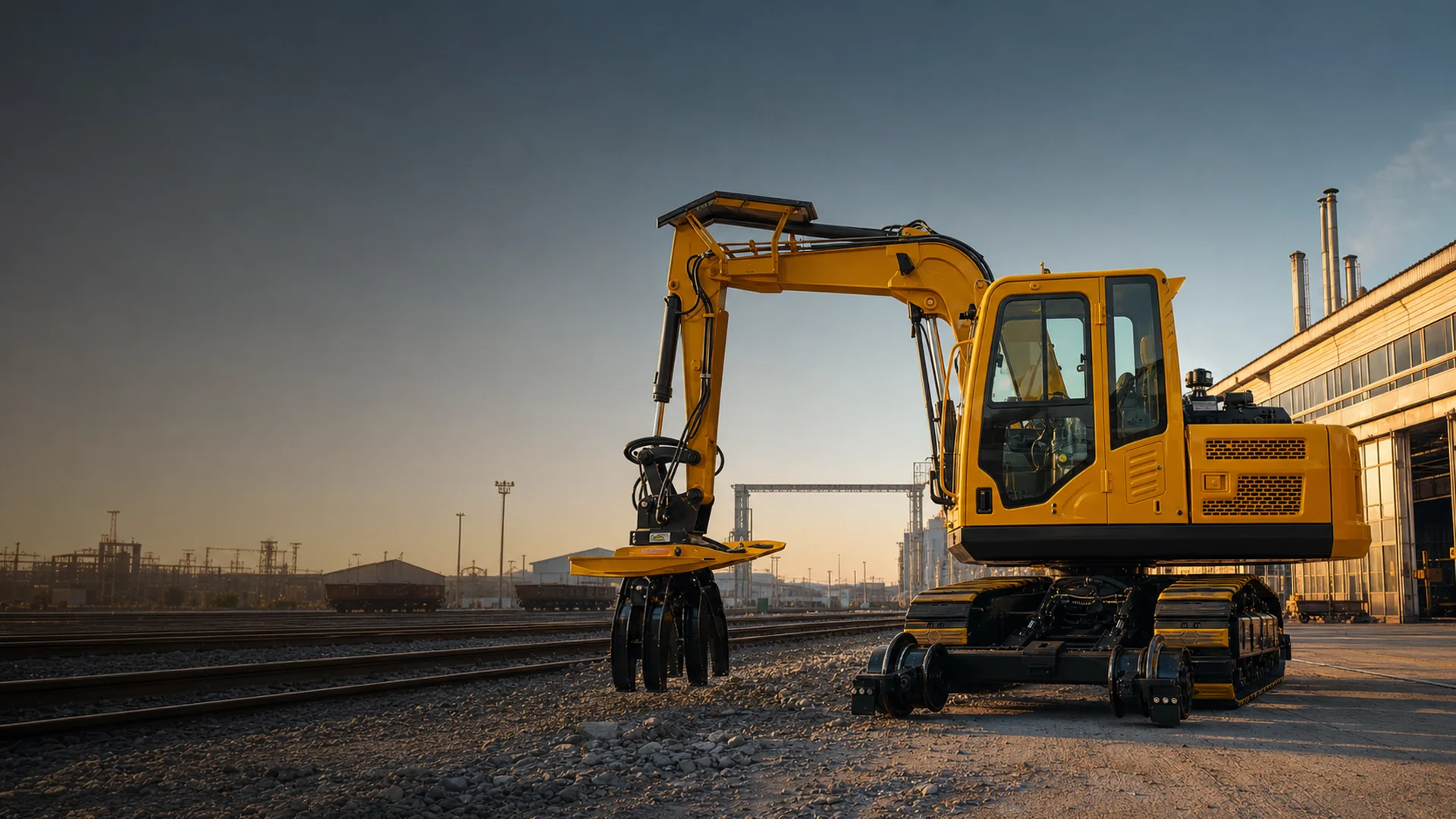
JG80LT sleeper replacer on track maintenance duty. Photo: Jinggong railway equipment range.
Brazil runs a lot of its network on meter-gauge track through hot, humid, ballast-heavy conditions — not an easy environment for sleeper replacement work. The JG80LT was built as a hi-rail crawler machine with an optional rescue/emergency assist system for exactly this kind of demanding maintenance window. It’s one of the reasons this model, alongside deployments in Thailand, Indonesia and New Zealand, has become one of our most requested railway units for export.
Why Brazil’s Rail Network Is a Tough Place to Work
If you’ve never maintained track in Brazil, here’s the short version: a lot of the network runs on meter gauge rather than standard gauge, ballast degrades faster in tropical humidity, and maintenance crews often get a narrow window between passenger and freight services to actually get the work done. That combination punishes equipment that isn’t built for rail-and-road switching or that needs a long setup time to get on and off the track.
It’s also not a forgiving place to have a machine break down mid-shift. Rail corridors aren’t like a construction site where you can just reroute around a stalled excavator — a stuck machine can hold up the whole maintenance window, and sometimes the whole line. That single fact shapes a lot of what buyers there actually ask us for.
What the JG80LT Actually Does on a Sleeper Job
The JG80LT is a crawler-based hi-rail machine — it can travel on rail wheels along the track and lower onto crawler tracks to do the physical work of lifting out old, degraded sleepers and setting new ones in place. That crawler undercarriage matters here for the same reason it matters on any soft or uneven ground: ballast isn’t a stable surface, and a wheeled machine would struggle where tracked stability makes the job routine.
In practice, that means a crew can move the JG80LT into position, switch it onto the rail, work down a section replacing sleepers, and clear the track again without needing a separate transport vehicle for every short move along the corridor.
The One Feature Buyers in Brazil Ask About Most
It’s the optional rescue and emergency assist system. On a live rail corridor, “what happens if the machine can’t move under its own power” isn’t a hypothetical question — it’s a scheduling and safety question a maintenance contractor has to be able to answer before they’re allowed on the line. The JG80LT’s rescue system exists specifically so a stalled unit doesn’t turn into a blocked corridor, which is exactly the scenario that worries rail maintenance planners more than almost anything else.
It’s a small line item on a spec sheet, but it’s usually the first thing serious rail contractors ask about — more than tonnage, more than dig depth.
JG80LT at a Glance
| Spec | JG80LT Sleeper Replacer |
|---|---|
| Undercarriage | Crawler (hi-rail capable) |
| Primary Task | Sleeper (tie) removal and installation |
| Rescue System | Optional emergency assist / rescue system |
| Deployed In | Brazil, Thailand, Indonesia, New Zealand |
| Best Suited For | Ballast track, tight maintenance windows, mixed-gauge networks |
Sourcing for a Similar Project? Here’s What to Check
If you’re looking at sleeper replacers for a Brazilian contract — or anywhere with similar meter-gauge, high-humidity conditions — the things worth confirming before you order are the rail gauge compatibility, whether the rescue/emergency assist system is included or optional, and how the machine transitions between rail and crawler mode. Those three details tend to matter more on the ground than anything else on the spec sheet. If you’re also comparing this against other railway maintenance equipment in our range, or still deciding between a crawler and wheel undercarriage for other parts of your fleet, our crawler vs wheel excavator guide covers the same trade-offs in more general terms.
FAQ
What does a sleeper replacer machine actually do?
It removes worn or damaged railway sleepers (ties) and installs new ones along a track, usually as a hi-rail machine that can switch between road/rail travel and crawler-mode track work.
Is the JG80LT suited to meter-gauge rail networks like Brazil’s?
Yes. The JG80LT has been exported and put into service on rail networks including Brazil’s, where gauge and ballast conditions call for a stable crawler-based hi-rail machine.
Why does the rescue system matter for rail maintenance work?
A stalled machine on a live rail corridor can block the entire maintenance window. The optional rescue/emergency assist system lets crews clear a stalled unit without shutting down the line.
Which countries has the JG80LT been exported to?
The JG80LT sleeper replacer has been exported and put into service in Brazil, Thailand, Indonesia and New Zealand for railway track maintenance work.
Sourcing a Sleeper Replacer for Your Rail Network?
Send us your rail gauge, ballast conditions and maintenance window — we’ll confirm whether the JG80LT is the right fit.
Ask About the JG80LT →