
Railway material handlers are specialised machines for trackside lifting, sleeper handling, ballast work and rail maintenance. The right machine is not selected by operating weight alone. Buyers need to match the rail gauge, work scope, attachment, transport plan and site safety requirements before requesting a quotation.
What Is a Railway Material Handler?
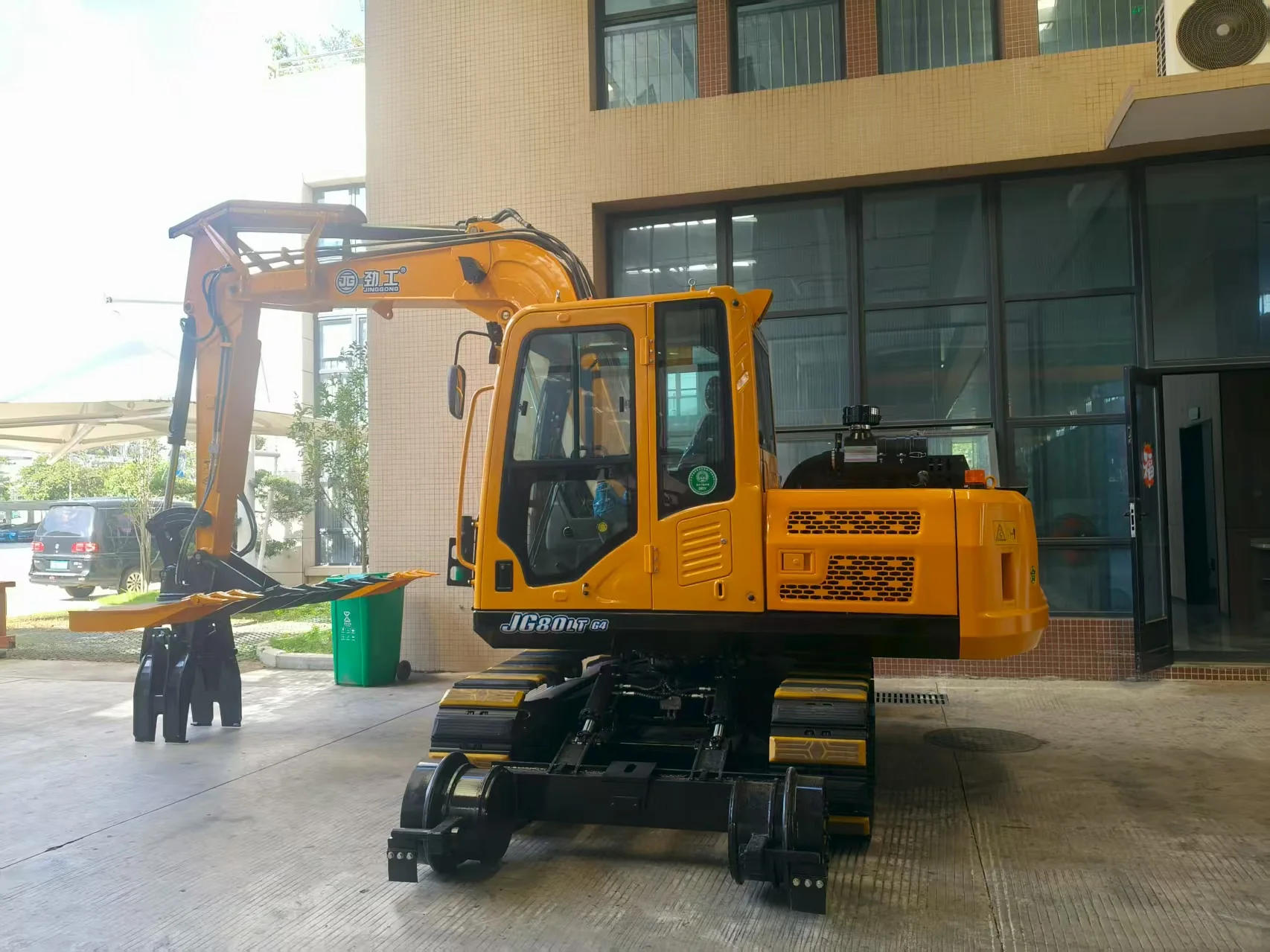
A railway material handler is a purpose-configured machine used where conventional construction equipment is not enough for rail maintenance work. Depending on the project, it may be used to lift and place sleepers, handle rail components, manage trackside materials, support maintenance crews or work with grapples and other attachments.
The term can describe several machine arrangements. Some projects need a crawler-based machine for rough or soft ground. Others need a rail-capable configuration designed around a specified gauge. Attachment choice also changes the job: a grapple, sleeper clamp, bucket, magnet or lifting device creates very different operating requirements.
For this reason, serious buyers should avoid sending only the message “Please quote one railway excavator.” A useful RFQ explains the application. This reduces clarification time and makes it easier to compare quotations on the same basis.
Five Questions to Answer Before Choosing a Model
1. What material will the machine handle?
Begin with the load and task. A machine that handles sleepers may need a different attachment and operating envelope from a machine used for bulk material, rail components or maintenance debris. Tell the supplier the approximate weight, dimensions and condition of the material. If the item is irregular, wet, damaged or handled in bundles, say so clearly.
Also explain whether the machine will mainly lift, sort, load, place or travel between work areas. The attachment is not a minor accessory. It affects visibility, cycle time, hydraulic demand, stability and operator workflow.
2. What rail gauge and track conditions apply?
Railway projects may use standard gauge or a project-specific gauge. The gauge must be stated in millimetres in the RFQ. The supplier also needs to understand track condition, switches, crossings, clearance restrictions and whether the machine will work only on rail or also on adjacent ground.
Track access matters just as much. Is the work site reached by road, rail, a depot, a tunnel or a restricted urban maintenance window? These details influence transport dimensions, machine arrangement and practical deployment planning.
3. What working radius and lifting height are required?
Buyers often focus on machine size but forget the operating position. A load that is manageable close to the machine can become a different task at a longer radius. Provide the required lifting radius, lifting height and whether work happens to the front, side or rear of the machine.
Include obstacles such as overhead structures, platforms, retaining walls, drainage channels or neighbouring live tracks. A clear site description helps the supplier evaluate whether a proposed configuration is suitable for the intended work.
4. Which attachment is needed?
Ask for the attachment that matches the material and method of work. Typical options may include a grapple, sleeper clamp, bucket, lifting device or other purpose-built tool. Do not assume that every attachment works with every job or configuration.
| Project need | Information to provide in the RFQ |
|---|---|
| Sleeper handling | Sleeper type, length, weight, handling frequency and placement method. |
| Bulk material handling | Material type, density, bucket or grapple requirement, and loading target. |
| Rail component handling | Component dimensions, weight, lifting points and required placement accuracy. |
| Mixed maintenance work | List all attachments required and identify the primary daily task. |
5. What support and delivery information is needed?
For an international purchase, a quotation is more useful when it considers the full delivery process. Share the destination country, preferred port or inland destination, expected quantity and target delivery schedule. Ask which documents, manuals, spare-parts support and commissioning information are available for the proposed configuration.
It is also sensible to identify who will operate and maintain the equipment. A buyer who needs a machine for a contractor fleet may have different training, spare-parts and service requirements from a buyer supplying a single dedicated project.
How to Compare Supplier Quotations Fairly
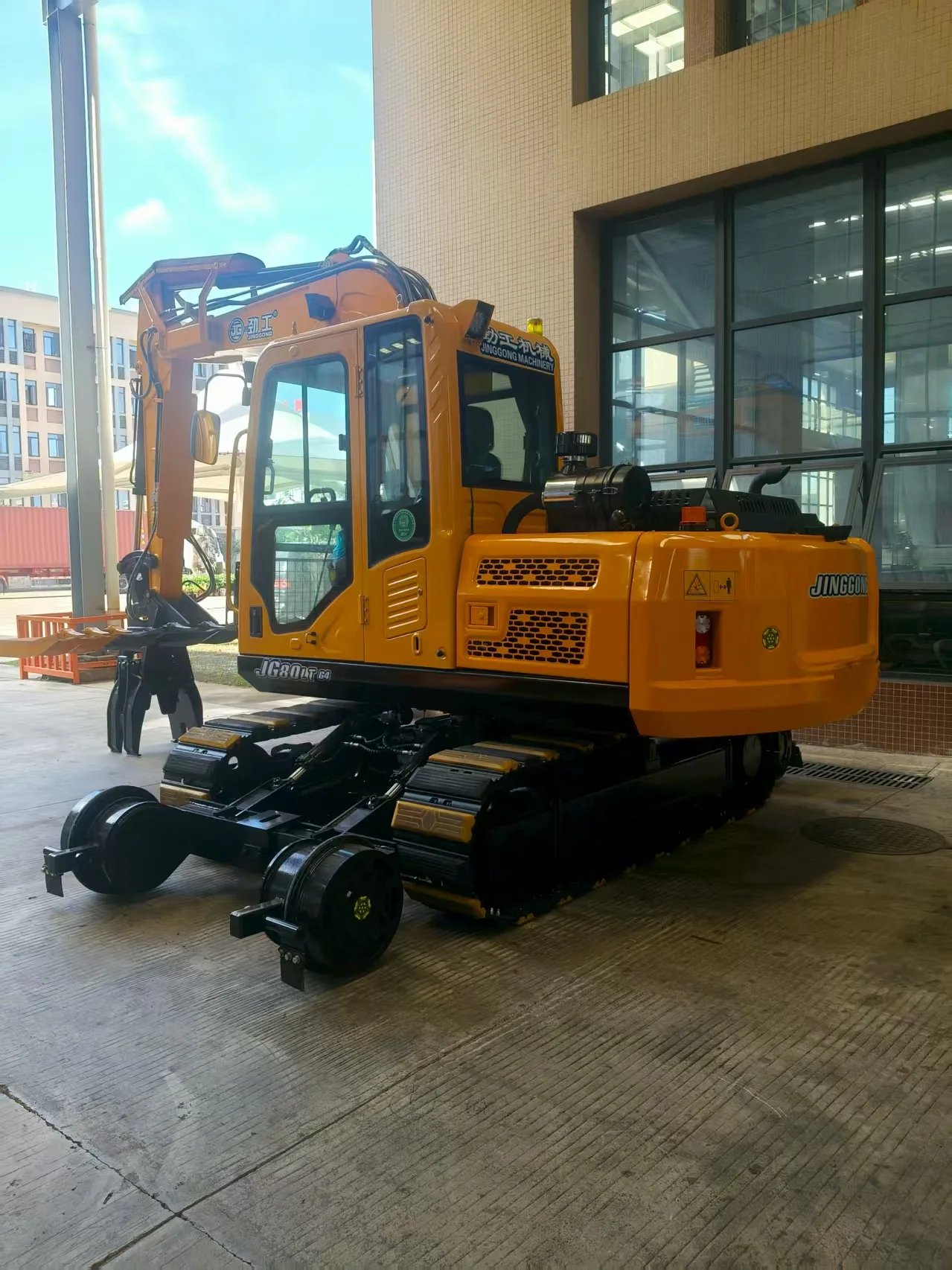
Comparing only the headline price is risky because two quotations may describe different machine configurations. Ask each supplier to state the model, power system, attachment, rail arrangement, included equipment, exclusions, delivery terms and support scope in writing.
- Confirm the exact machine model and intended application.
- Confirm rail gauge or track-related configuration where applicable.
- Confirm the attachment model and what material it is designed to handle.
- Ask for technical parameter sheets for buyer review.
- Ask what is included in the delivered scope and what is optional.
- Confirm destination, shipment assumptions and lead-time basis.
- Request photos or videos of comparable machine configurations where available.
A clear technical comparison protects both buyer and supplier. It also helps prevent a machine being specified for a task that was never fully described during the enquiry stage.
RFQ Template for Railway Material Handling Equipment
Copy the following checklist into an email or WhatsApp enquiry:
- Destination country and port or city:
- Project type: track maintenance, sleeper replacement, material handling or other:
- Rail gauge required:
- Material to handle, including approximate weight and dimensions:
- Required attachment: grapple, clamp, bucket, lifting device or other:
- Maximum working radius and lifting height:
- Ground and track conditions:
- Quantity required and preferred delivery date:
- Required documents, spare parts or support:
Frequently Asked Questions
Can a standard excavator be used for railway work?
It depends on the task. Railway projects often need a configuration, attachment and working arrangement that should be matched to rail conditions and the intended maintenance work. Share the project details before selecting a machine.
What is the most important detail to include in a railway equipment enquiry?
State the actual application and rail gauge first. Then add material weight, attachment requirement, working radius and destination. These details make a technical recommendation more accurate.
Should I request a parameter sheet before ordering?
Yes. A parameter sheet helps the buyer review the proposed machine configuration and compare it with the project requirement before confirming an order.
Request a Railway Equipment Recommendation
Send your rail gauge, application, material details, attachment requirement and destination. Jinggong can help match a suitable railway equipment configuration and prepare a clear factory quotation.
Get a Factory Quote →