
A railway screening machine is purchased for a specific maintenance workflow: material screening, track-related maintenance, worksite access and project scheduling. Buyers get a more useful technical proposal when they clearly define the work material, rail gauge, site conditions, required output and destination.
What Is a Railway Screening Machine Used For?
Railway screening equipment is used in maintenance projects where material condition and trackside work efficiency are important. Depending on the project, the machine may support screening work, material handling, maintenance access or a wider rail-service workflow.
The right machine is defined by how it will work on site. For example, a buyer may need equipment for a planned renewal project with repeated material handling, while another buyer may need a more flexible setup for maintenance work across several locations. These are different procurement cases, even if both start by searching for a “railway screening machine.”
A good enquiry explains the project rather than only requesting a model and price. That gives the manufacturer an opportunity to assess the proposed arrangement against the actual use case.
Key Information to Prepare Before Requesting a Quote
1. Describe the material to be screened or handled
Explain the material type and condition. Is it dry, wet, compacted, mixed with debris, fine material or larger aggregate? Is the work continuous or occasional? The material itself affects the practical screening arrangement and the expected operating workflow.
Photos and a short site video can be especially useful. They help the supplier understand material size, access limitations and whether other attachments or tools may be needed during the same project.
2. State the rail gauge and working location
Rail gauge is one of the most important technical details for railway-related equipment. State the required gauge in millimetres. Also explain whether the machine will work directly in relation to the track, beside the track, or move between rail and ground work areas.
Include nearby restrictions: bridge approaches, tunnels, stations, overhead structures, adjacent live lines, narrow service roads or limited unloading space. A screening machine may be technically capable, but the final configuration also needs to fit the real access conditions.
3. Clarify the daily work sequence
Describe what happens before and after screening. Will material be loaded into trucks, placed alongside the track, moved by another machine or reused at the worksite? Does the equipment need to travel between several maintenance zones in one shift?
This information is useful because screening work is rarely isolated. The machine must fit into the contractor’s wider maintenance process, crew plan and material movement method.
Technical Data: How Buyers Should Read It
Technical specifications are valuable only when they are connected to the job. Do not simply compare the largest number on two parameter sheets. Instead, compare whether the specifications support the application, access conditions and required configuration.
| Specification area | Buyer question | Why it matters |
|---|---|---|
| Operating weight | Can the worksite and transport plan accommodate the machine? | It affects access, delivery and operating conditions. |
| Engine and power system | Does the proposed configuration suit the expected work cycle? | Power requirements should match the actual screening and handling task. |
| Hydraulic system | Which attachment or screening equipment will be used? | Hydraulic requirements depend on the working tool and duty cycle. |
| Rail gauge | Is the configuration matched to the project gauge? | Railway equipment must be specified for the relevant track requirement. |
| Working range | Can the machine reach the material and loading point safely? | Reach, height and machine position affect practical job performance. |
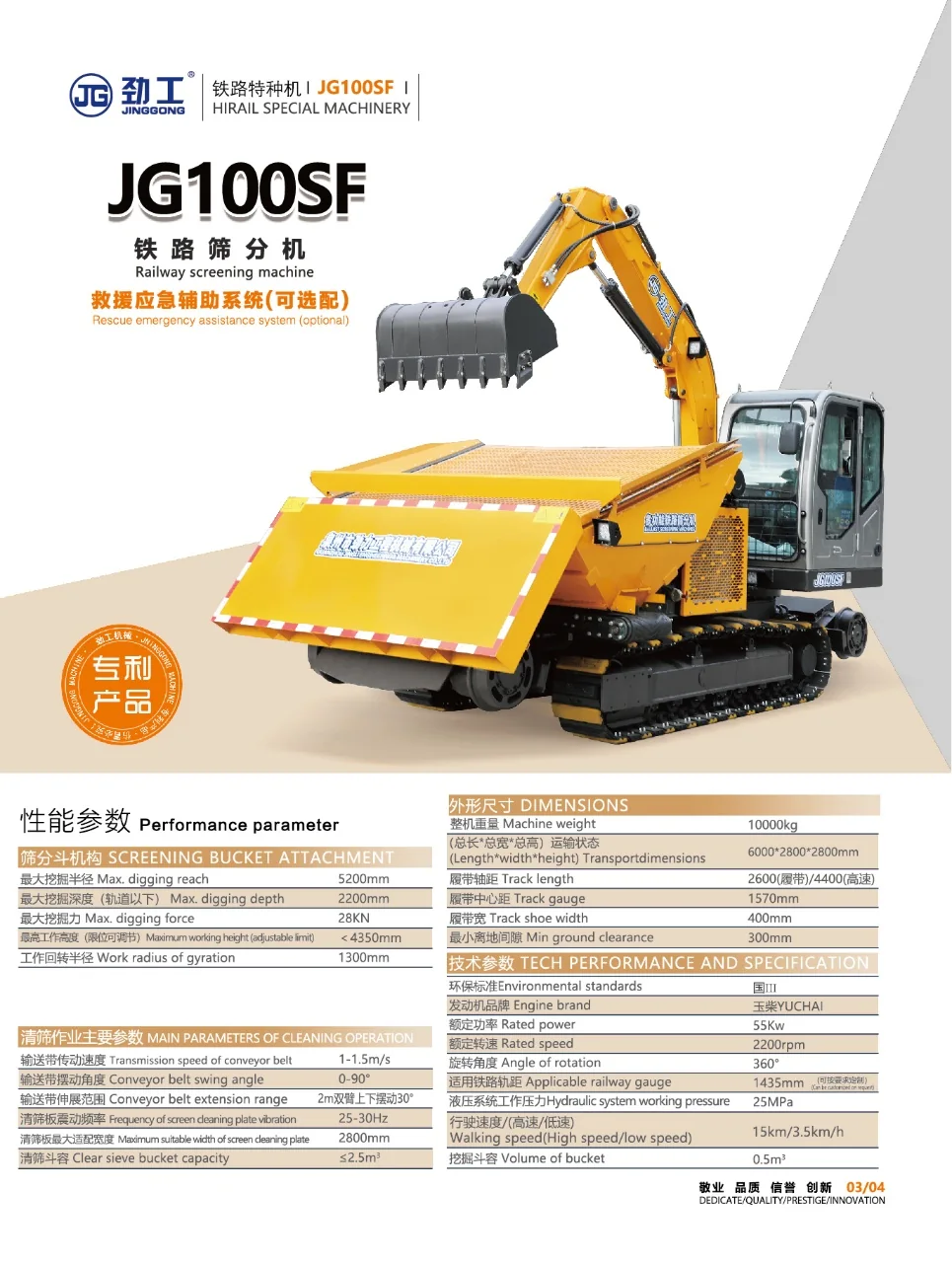
JG100SF Railway Screening Machine: Information to Confirm
For buyers reviewing the JG100SF, the first step is to request the current parameter sheet and identify the intended configuration. The equipment should be discussed alongside the project rail gauge, work material, screening arrangement, attachment requirement and transport destination.
When sending an enquiry, ask the sales team to confirm:
- The proposed operating configuration for your project.
- Whether the required rail gauge can be matched.
- The screening or attachment arrangement included in the quotation.
- The standard scope, options and excluded items.
- Available product documentation for buyer review.
- Delivery assumptions for your port or destination.
- Recommended spare parts or service items for initial operation.
How to Compare Railway Screening Machine Suppliers
For international projects, compare suppliers on clarity as well as price. A detailed quotation should identify the exact model and scope of supply. If one supplier gives only a short price list and another gives a clear technical configuration, attachment description and delivery basis, the second quotation is usually easier to evaluate.
- Compare the same project requirements with every supplier.
- Ask each supplier to list standard equipment and optional equipment separately.
- Request product photos, parameter sheets and available factory information.
- Confirm whether the proposed machine is for the stated rail gauge and work method.
- Ask for a clear commercial basis: quantity, destination, delivery terms and validity.
RFQ Template for Railway Screening Equipment
Use the following checklist to create a faster, more accurate enquiry:
- Destination country, port and final delivery location.
- Rail gauge in millimetres.
- Material to be screened or handled, including photos if available.
- Daily work objective and expected operating hours.
- Required attachment, screen or additional equipment.
- Site access, clearance and ground condition.
- Required quantity and target delivery date.
- Required documents, manuals, spare parts or training support.
Frequently Asked Questions
Should I select a railway screening machine by operating weight only?
No. Operating weight is only one reference point. Rail gauge, material condition, screening arrangement, access, attachment and daily work method should all be confirmed.
Why should I send site photos with an RFQ?
Site photos help show available clearance, material condition, access roads and trackside working space. This allows the supplier to make fewer assumptions.
Can the manufacturer provide a technical parameter sheet?
Yes. Request the parameter sheet for the exact model and proposed configuration, then review it against the project requirement before confirming an order.
Request a JG100SF Railway Screening Machine Proposal
Send your rail gauge, work material, required configuration, project photos and destination. Jinggong can prepare a technical recommendation and factory quotation for review.
Request a Technical Quote →