
A mini excavator digging depth chart helps contractors check whether a machine can complete trenches, footings, drainage runs and landscaping work before purchase. Digging depth depends on the excavator model, boom and arm configuration, bucket position, track position and ground conditions. Use the ranges below as a planning reference and confirm final figures on the manufacturer’s specification sheet.
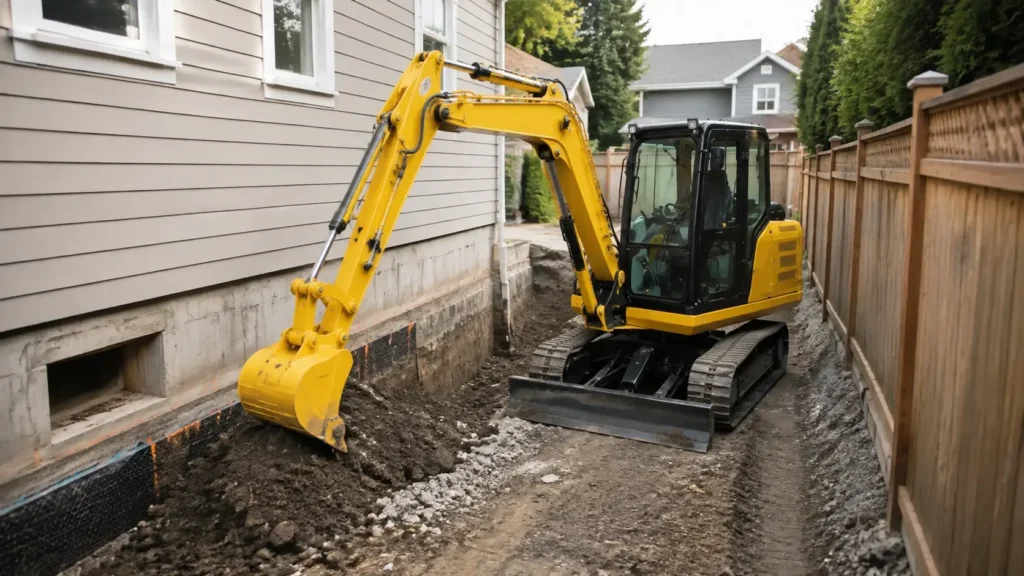
Mini Excavator Digging Depth Chart
| Machine class | Typical working profile | Common applications | Important checks |
|---|---|---|---|
| Under 2 tonnes | Light excavation and restricted access | Landscaping, small drainage and garden work | Maximum dig depth, arm reach and bucket size |
| 2–3.5 tonnes | Compact utility and residential work | Service trenches, footings, grading and pipe work | Dig depth, tail swing, access width and stability |
| 3.5–6 tonnes | General-purpose compact excavation | Deeper drainage, site preparation and heavier earthmoving | Reach, breakout force, bucket capacity and transport |
| 6–10 tonnes | Higher reach and productivity | Construction, road work and larger utility projects | Working radius, lifting chart, ground pressure and attachments |
The machine classes above are reference groups, not fixed industry specifications. Two excavators with similar operating weight may have different digging depths because of boom length, arm geometry, counterweight and bucket configuration. Compare the actual model data before making a purchasing decision.
What Determines Excavator Digging Depth?
Boom and arm configuration
The boom and arm determine how far the bucket can reach and how deep it can work below ground level. A long-arm configuration may improve reach, while a compact configuration can be easier to control in restricted spaces. Ask for the digging-depth figure for the exact boom, arm and bucket combination you plan to use.
Bucket position and tooth design
Published digging depth is normally measured with the bucket in a defined position. A larger bucket, different tooth system or quick coupler can change the working geometry. For a closer look at width, capacity and bucket compatibility, read our Excavator Bucket Size Chart.
Ground and jobsite conditions
Soil hardness, trench stability, slope, underground services and available working room all affect the practical depth a contractor can achieve. A specification-sheet maximum should not be treated as a recommendation for every site. Plan safe access and follow the operating instructions for the selected machine.
How Deep Should a Mini Excavator Dig?
Begin with the deepest point required by the project, then add enough working margin for the bucket, trench profile and site conditions. For utility and drainage work, confirm the required trench depth and width. For footings, confirm the design requirements with the responsible project professional. For landscaping, access and low surface disturbance may be more important than maximum depth.
Also compare digging depth with operating weight, working radius and transport requirements. Our Excavator Operating Weight Chart can help you understand how machine class affects reach and jobsite planning.
Digging Depth, Reach and Dump Height
Digging depth is only one part of the working envelope. Contractors should also review maximum digging reach, maximum dumping height, vertical wall digging depth and minimum front swing radius. These figures help determine whether the excavator can dig, load and place material without frequent repositioning.
For a complete machine comparison, combine the depth data in this guide with our Mini Excavator Size Chart and the attachment recommendations in our Mini Excavator Attachments Guide.
What to Include in a Mini Excavator RFQ
Send the required digging depth, trench or footing dimensions, working radius, access width, soil type, preferred bucket, quantity and destination country. If the project requires lifting or special attachments, include those details as well. A supplier can then compare a suitable configuration instead of quoting from machine weight alone.
You can contact our OEM team with your application details and request a model comparison.
Mini Excavator Digging Depth FAQ
How is mini excavator digging depth measured?
It is measured from ground level to the lowest point the bucket can reach in a specified configuration. The exact method and configuration can vary, so compare the manufacturer’s stated measurement basis.
Can a mini excavator dig below its published maximum depth?
The published maximum is a model specification, not a universal operating recommendation. Actual work depends on soil, trench conditions, machine position, bucket configuration and safe operating limits.
Is digging depth more important than operating weight?
Neither should be considered alone. Digging depth confirms reach for the task, while operating weight affects stability, transport and the machine’s overall working capability. Select a configuration that meets both the project and site requirements.
What if I need a deeper trench than the mini excavator can reach?
Compare a machine with a longer reach or a higher operating-weight class, and review the complete working envelope. A supplier can recommend a different configuration after checking the required depth, width, soil and access conditions.